Scaling Six Brands Across Global Markets
Phaidon International is a global recruitment group with six specialist brands—Selby Jennings, LVI Associates, DSJ Global, EPM Scientific, Glocomms, and Larson Maddox—serving business-critical sectors across 14 international offices. Their digital presence was previously fragmented, with each brand maintaining its own site. This setup created inefficiencies, inconsistent UX, and high infrastructure overhead.
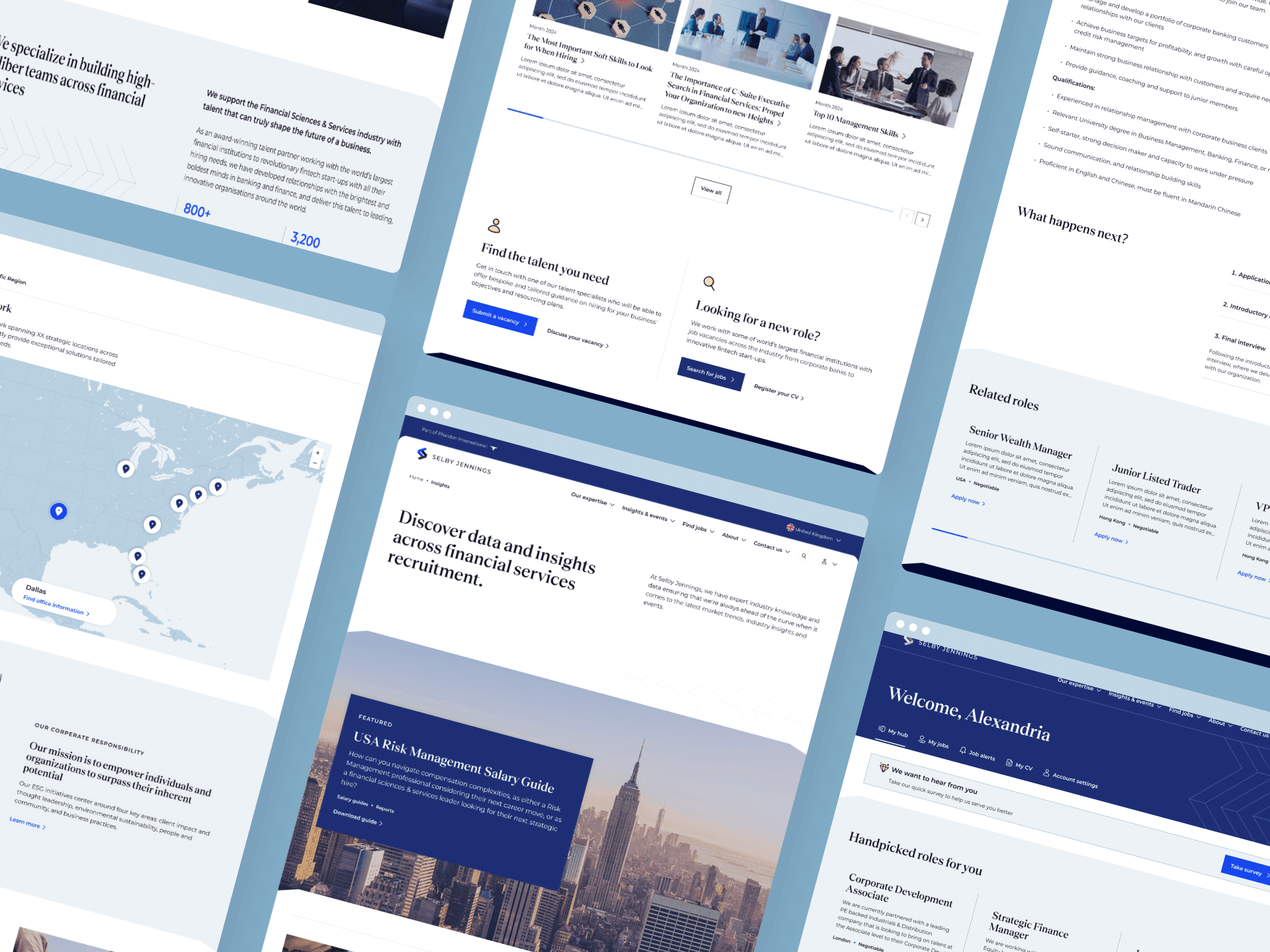
Overview
Phaidon International runs six specialist recruitment brands across 14 global offices: London, New York, Shanghai, Singapore, and beyond. Each brand maintained its own website and stack. The result: duplicated effort, inconsistent user experiences, and infrastructure costs that grew with every new market entry.
As Front-end Lead within a team of seven developers, I led the consolidation of six separate brand websites into a single scalable platform. I set the front-end direction, established the design system strategy, and made the architectural calls that allowed 72 site variants to coexist cleanly in one codebase.
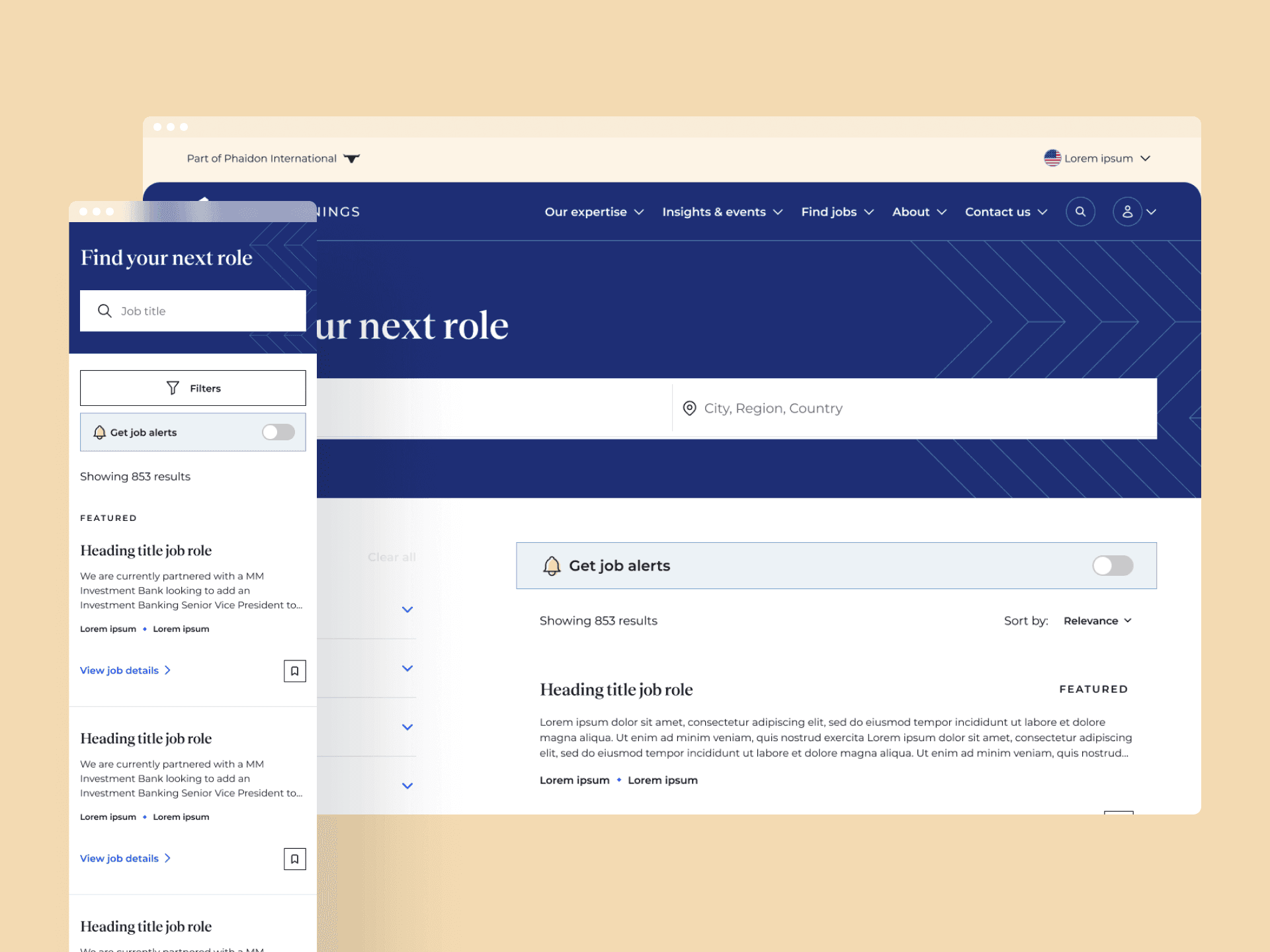
How we built it
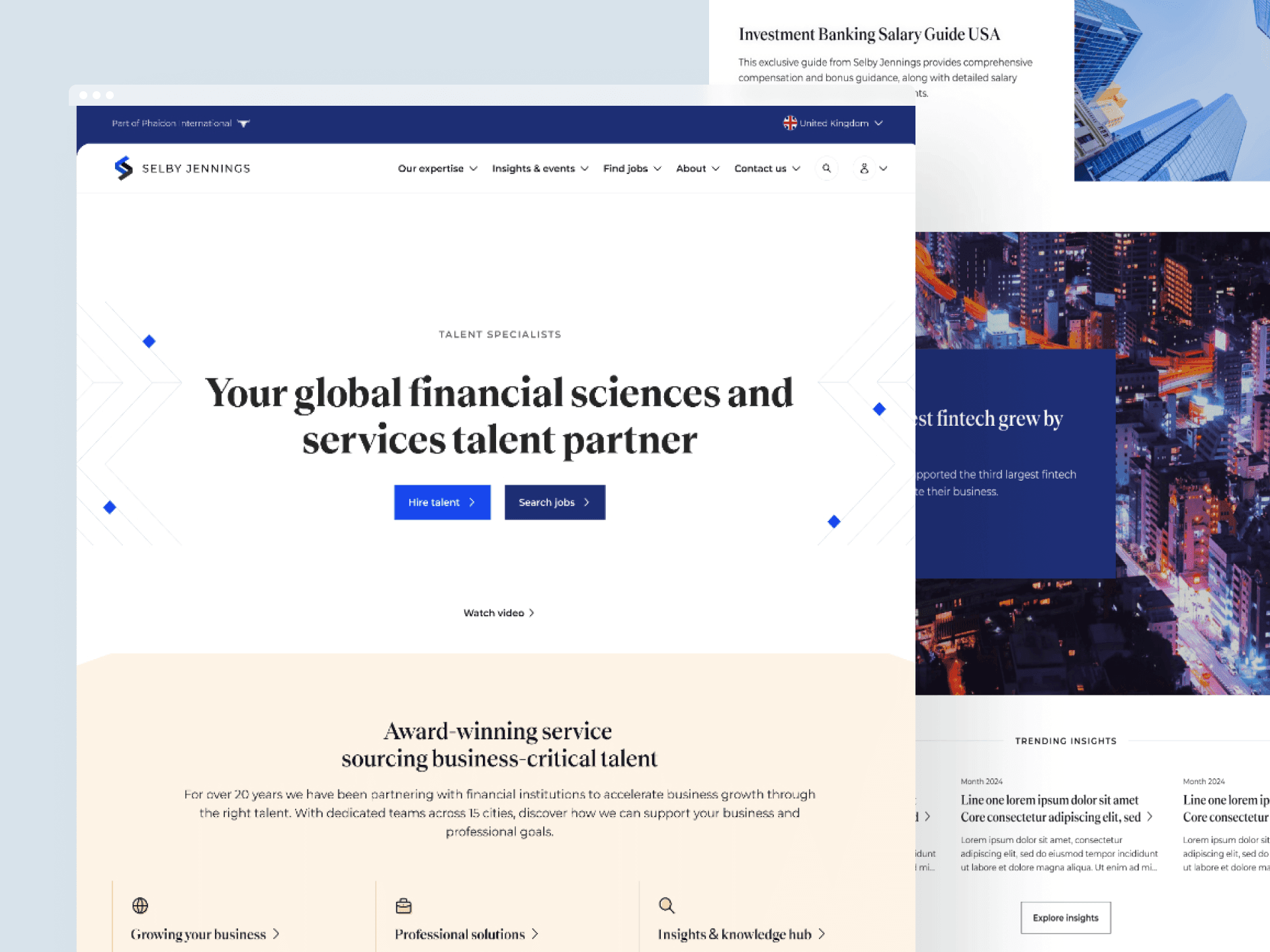
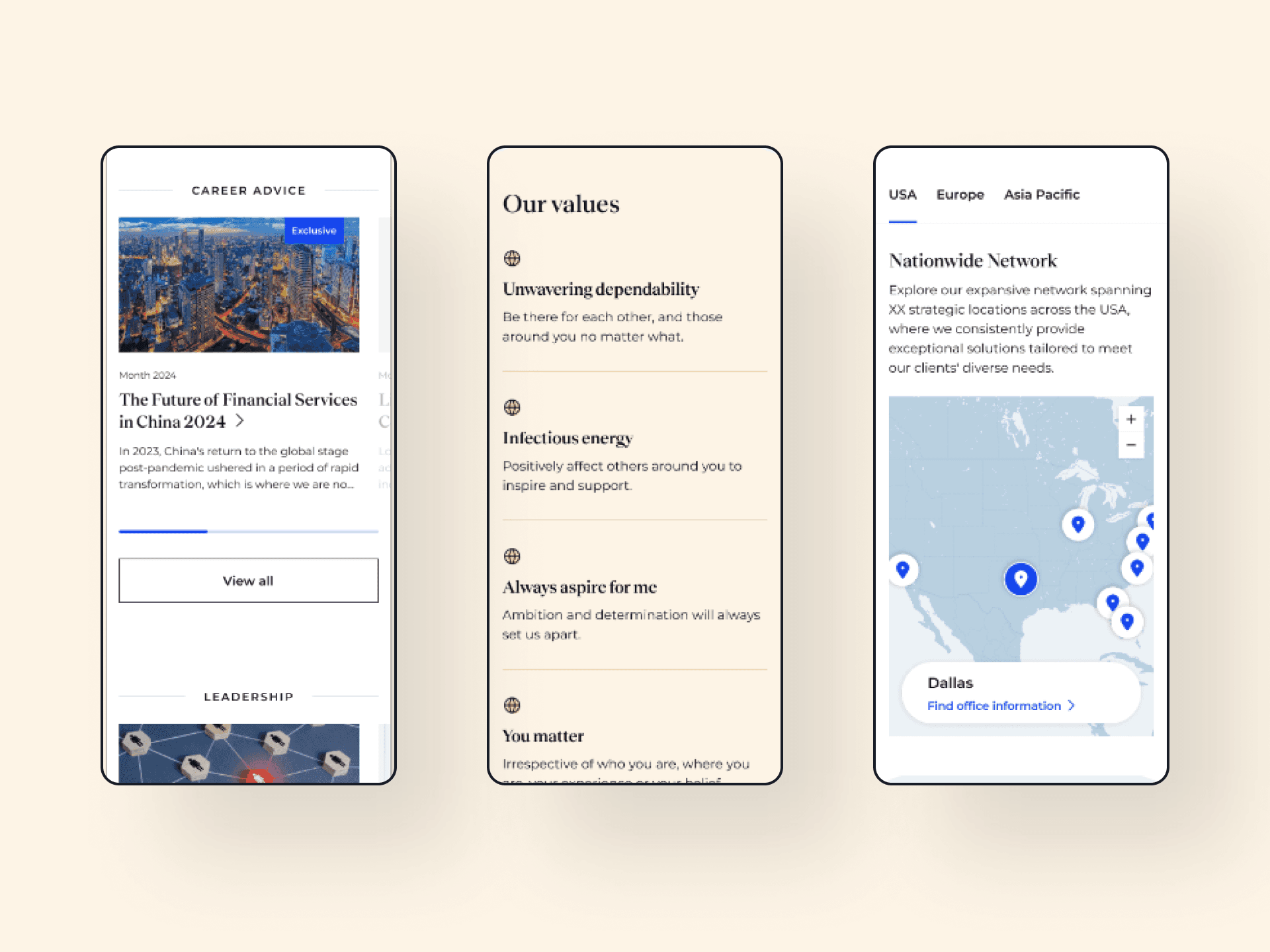
The platform was built on Next.js 15 (App Router) and deployed via Vercel. A tokenised design system was central to the architecture — it allowed all six brands to run from a shared codebase while maintaining distinct visual identities. Umbraco CMS handled content, connected via GraphQL to both the CMS and the .NET backend.
We built a scalable SEO foundation (schema markup, hreflang, paginated sitemaps, indexable job boards) and a taxonomy system for content personalisation, alongside account areas, job alerts, and deep CRM integration.
We also introduced user-facing features such as a personal account area, job alerts, and third-party authentication via Google, Apple, and LinkedIn. Behind the scenes, we integrated HubSpot as a CRM to streamline lead capture and conversion tracking across all brands.
Tech stack

Next.js 15
TypeScript
GraphQL

Umbraco CMS
+180%
increase in organic traffic to job listings
+250%
increase in job alert subscriptions
4×
increase in lead capture via CRM integration
-5
platform consolidation, reducing infrastructure costs by 40%
There's more to this story...
Architecture decisions made early paid dividends throughout. A shared component library, a robust taxonomy system and a single deployment pipeline meant that changes could propagate across all variants without each one needing individual attention.
A combination of a scalable SEO foundation built into the architecture from day one, schema markup, hreflang tags, paginated sitemaps and fully indexable job boards, alongside faster page load times that directly improved search ranking signals.
Previously each brand handled leads independently and inconsistently. Deep CRM integration unified the capture layer across all six brands, closing gaps in the funnel and giving the business a single, reliable view of prospective candidates and clients.